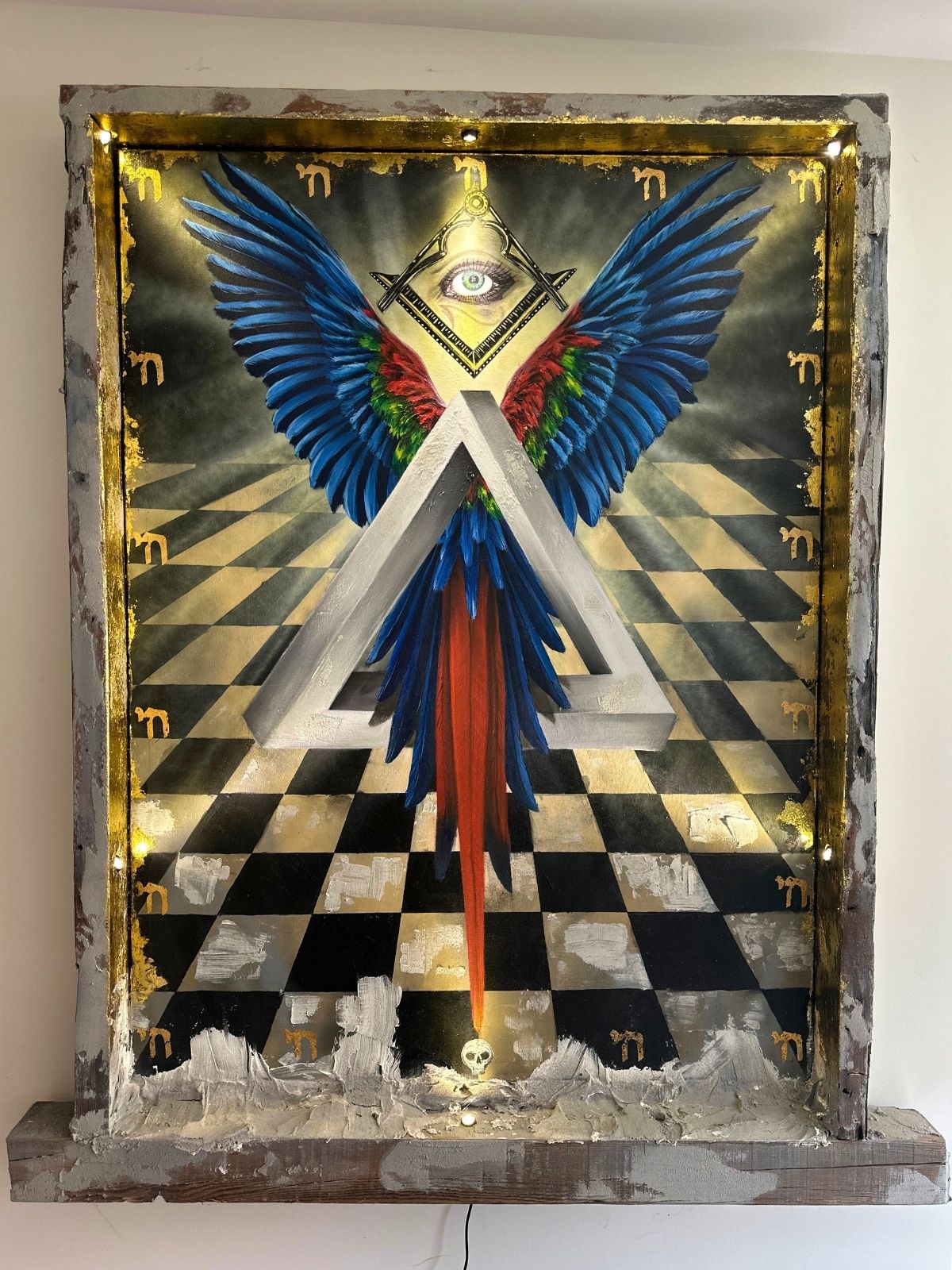
At the heart of the artwork lies a powerful dialogue between life, death, light, and matter.
The Hebrew word “חי” (Chai) — meaning life — appears 17 times, symbolizing vitality, prosperity, and the material aspects of living. Yet, the 18th “Chai” transforms into a skull, representing death. This subtle transition reflects the idea that death is inseparable from life — it influences us through loss, awareness of mortality, and the fragile balance between existence and impermanence.
The checkered floor evokes the arena of life, a symbolic journey between light and darkness. It represents the moral and emotional crossroads we all face — times of clarity and times of confusion. The light breaking through symbolizes hope and goodness, illuminating life’s colors even amid shadows.
The infinite triangle at the center hints at eternity, reincarnation, or life beyond life, while the Hebrew letter “ה” (He) — associated with the Divine — stands for faith, spirit, and the belief that even in darkness there is light.
The use of raw materials — concrete, metal, and gold — reflects the duality of the human condition: the spiritual and the material, the sacred and the mundane. Gold symbolizes value and desire; concrete and iron symbolize stability and struggle.
Ultimately, the painting invites contemplation on the cyclical nature of life and death, the coexistence of shadow and light, and the eternal search for meaning within the fragile structure of existence.
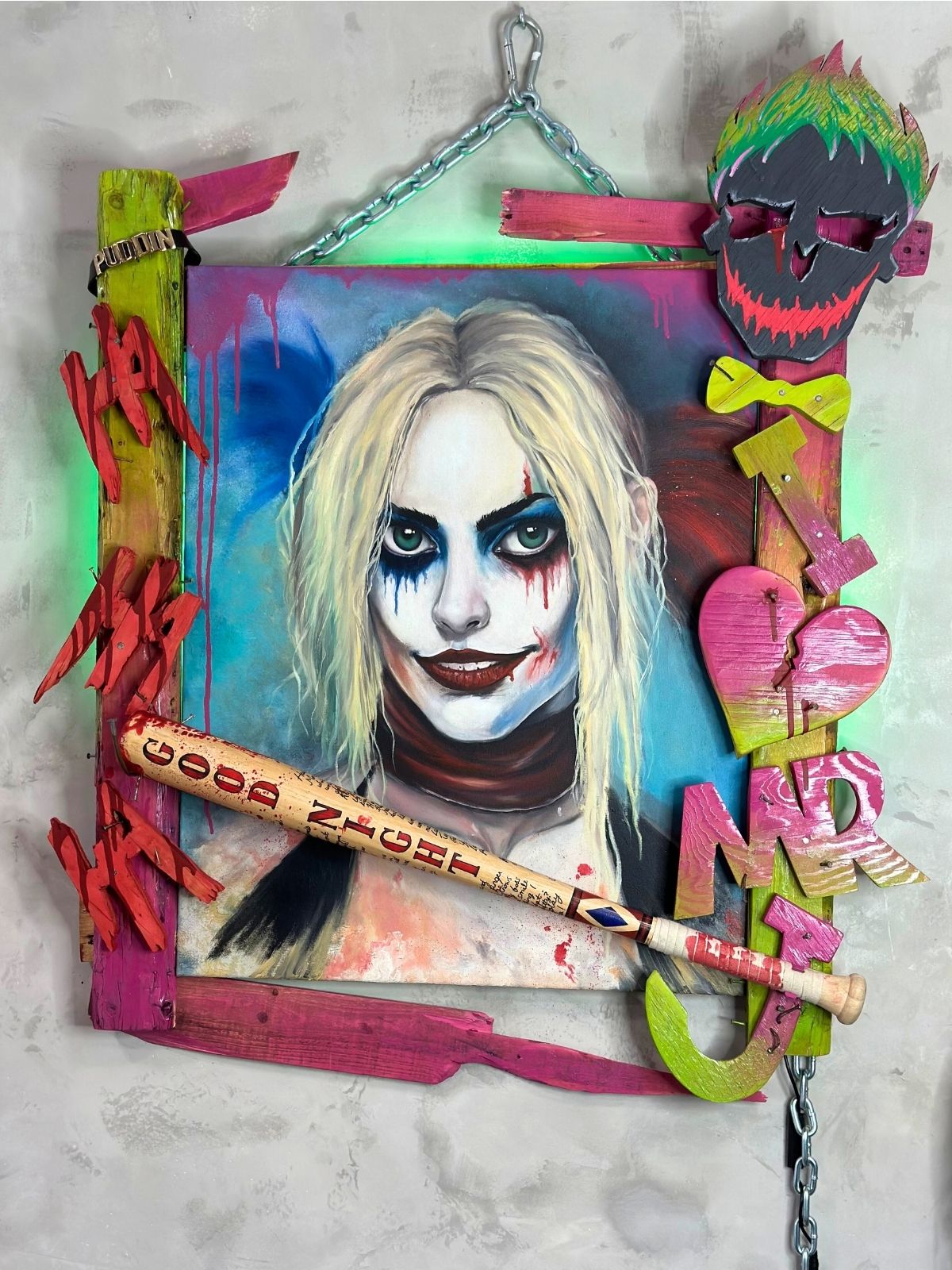
“My quinn”